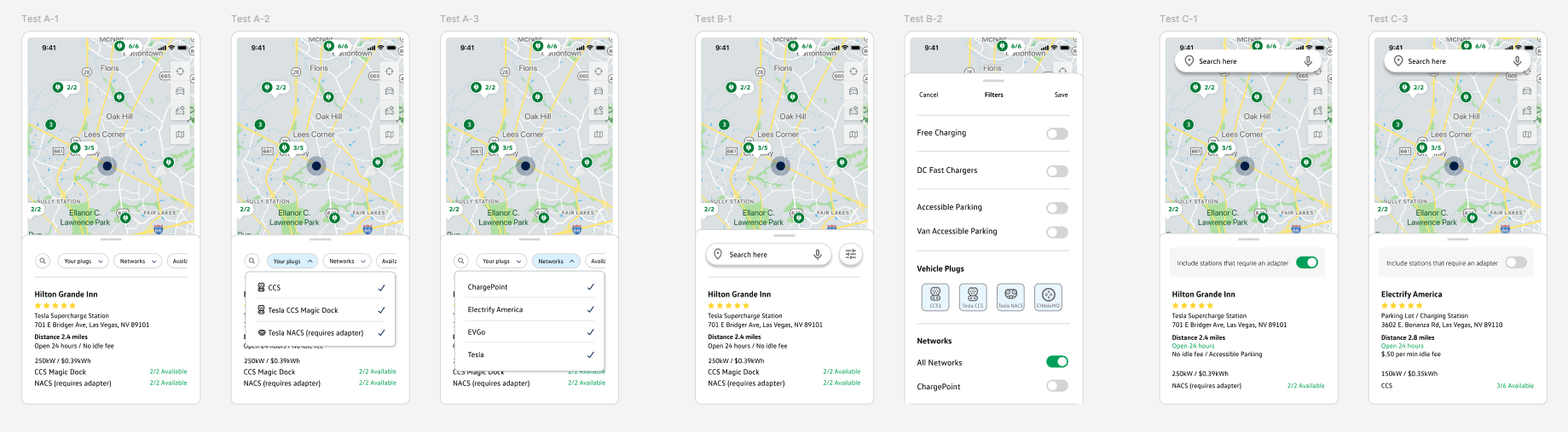
Exploring alternative ways to communicate charging compatibility and adapter requirements while minimizing cognitive load for drivers.
Simplifying the EV Charging Experience
Researching a rapidly evolving charging ecosystem to help non-Tesla drivers confidently navigate public charging.
The Challenge
As Tesla opened portions of its Supercharger network to non-Tesla vehicles, the charging experience became significantly more complex. Drivers needed to understand charger compatibility, connector standards, adapter requirements, and network availability—often before leaving home. The challenge was to determine how much technical information users actually needed and how best to present it without overwhelming them.
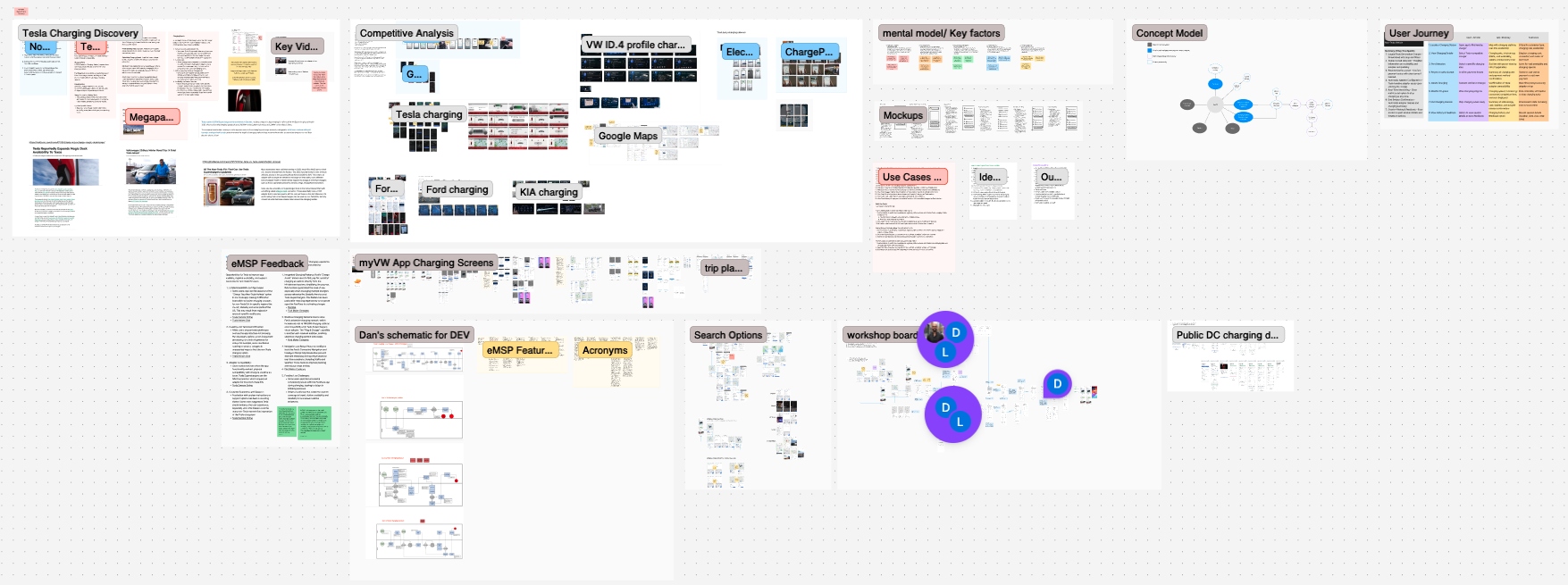
Research findings, competitive analysis, mental models, user journeys, concept models, and charging workflows were synthesized into a single collaborative workspace that guided product decisions.
Understanding an Emerging Ecosystem
Rather than designing immediately, I immersed myself in the rapidly changing EV charging landscape. Research included studying charging standards, adapter compatibility, competitor experiences, dealership knowledge, public charging networks, and evolving Tesla documentation. By organizing this information into a shared research framework, the team developed a common understanding of an industry that was changing almost weekly.
Key Research Findings
- Drivers struggled to identify compatible chargers
- Charging standards were evolving rapidly
- Adapter requirements added unnecessary complexity
- Existing experiences assumed technical expertise
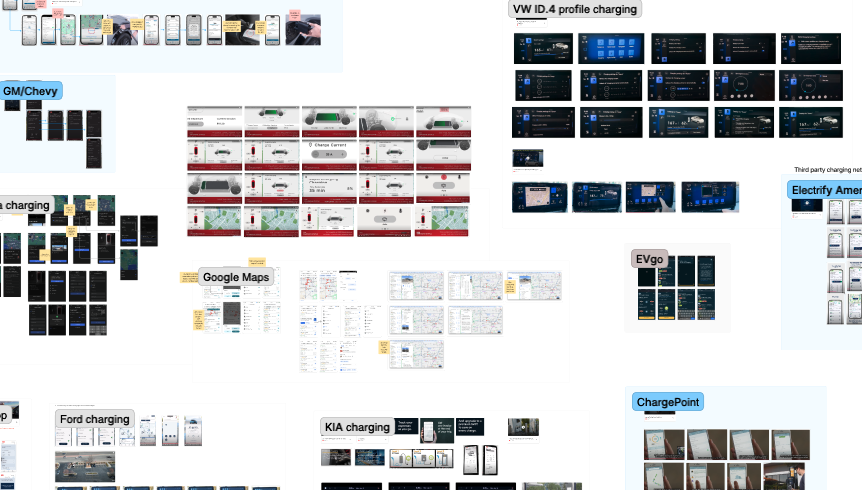
Competitive Analysis
To understand how drivers navigated the rapidly evolving EV charging landscape, I evaluated experiences across vehicle manufacturers, charging networks, and navigation tools. Comparing these products revealed common interaction patterns, inconsistent terminology, and gaps in the information drivers needed to confidently begin a charging session.
Key Observations
- Compared charging experiences across Tesla, Ford, GM, Nissan, Kia, ChargePoint, Electrify America, EVgo, and Google Maps.
- Identified common workflows and interaction patterns.
- Documented differences in charging terminology, compatibility messaging, and route planning.
- Evaluated how each experience communicated charger availability, connector types, and charging status.
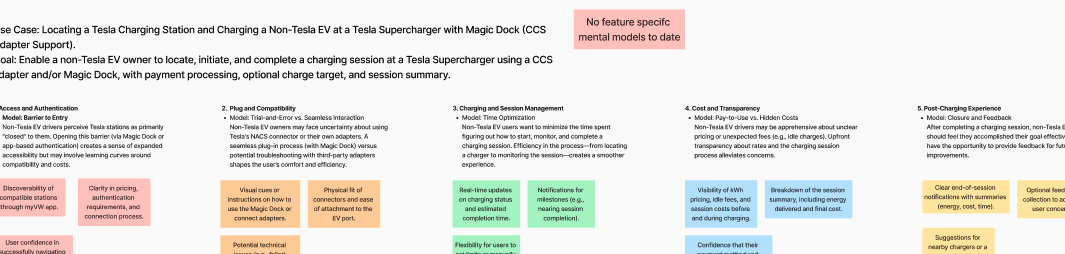
Mental Models
To better understand how drivers approached public charging, I mapped user expectations, questions, and decision-making patterns. This helped identify where the experience should educate users and where it should simply reduce complexity.
Concept Model
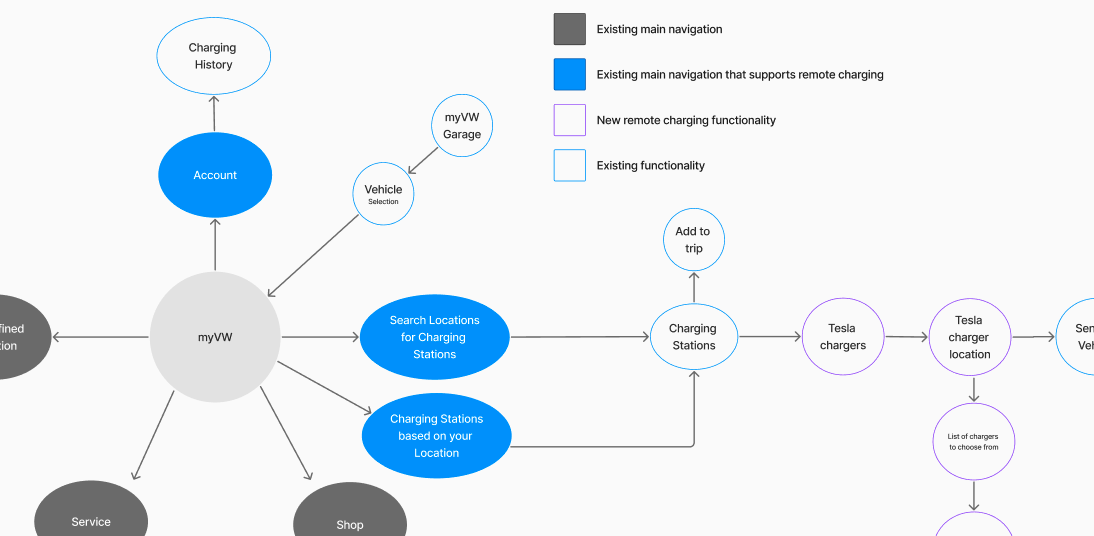
Research was synthesized into a concept model that organized the charging ecosystem into connected user needs, system behaviors, and information architecture. This became the foundation for subsequent design work.
Wireframes
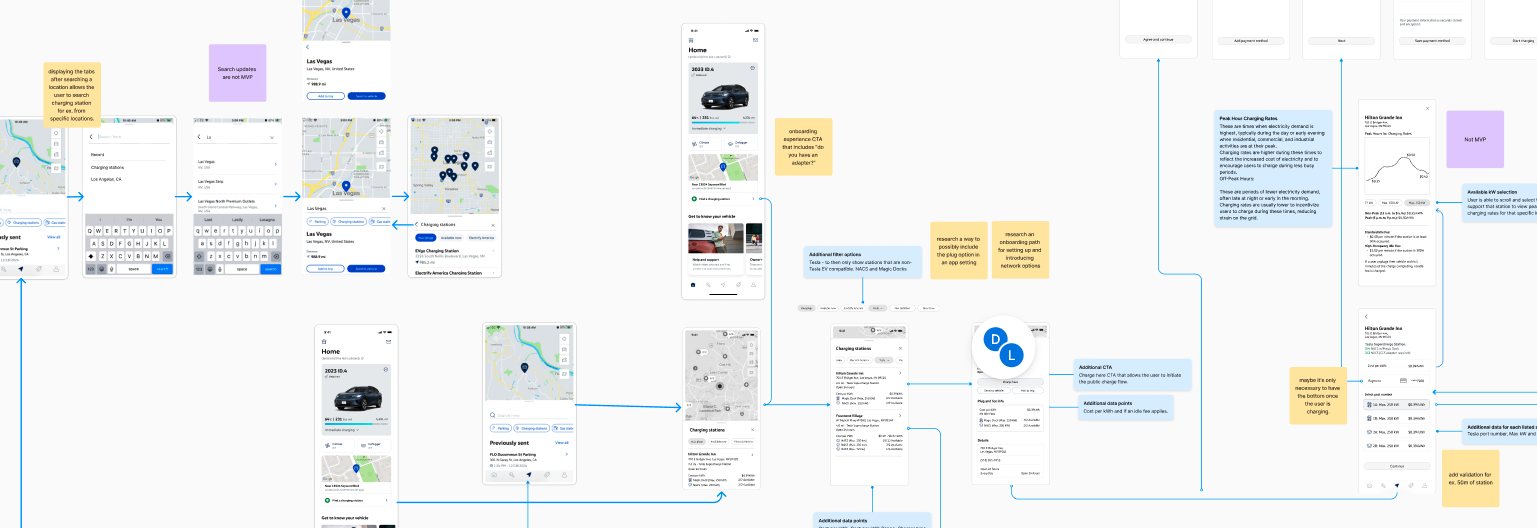
Insights from the research were translated into early workflows and interaction concepts, allowing ideas to be validated before visual design began.
Prototype
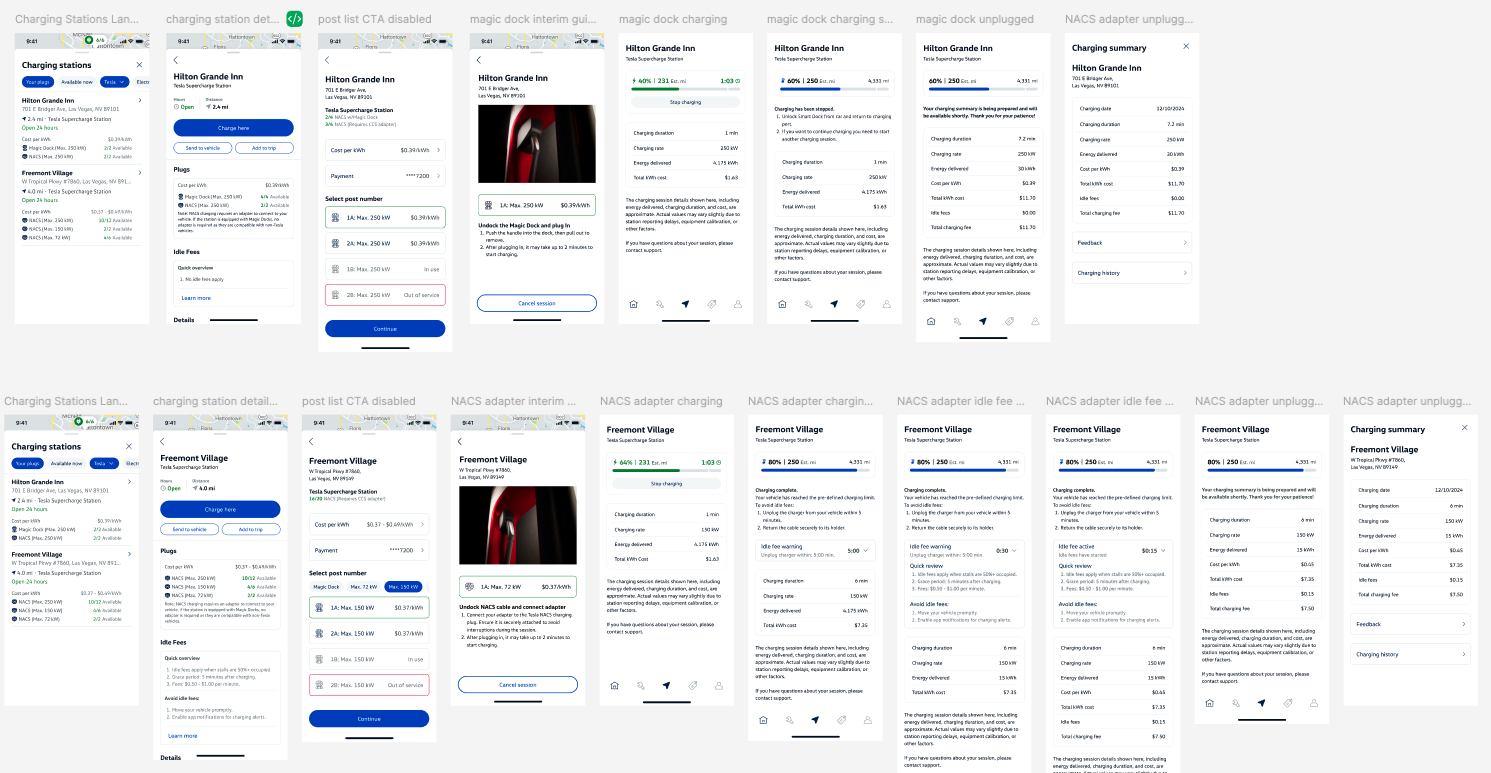
The resulting interface simplified a technically complex process by presenting the right information at the right time while reducing the need for drivers to understand charging terminology and hardware differences.
Outcome
My role focused on understanding a rapidly evolving charging ecosystem and translating that complexity into clear user workflows and interaction patterns. From there, the project transitioned to Volkswagen's design and marketing teams, who evolved the visual language, branding, and final interface while building upon the research and UX foundation we established.